


Reassessing the “Climate Crisis”
KSh 0 of KSh 18,000 raised
Notice: Test mode is enabled. While in test mode no live donations are processed.
The Science of Climate Change journal recently published a ground-breaking peer-reviewed study which used Artificial Intelligence (AI) to reassess man’s role in climate change. The study concluded as follows: “The anthropogenic CO₂-Global Warming hypothesis, as articulated by the Intergovernmental Panel on Climate Change (IPCC)…lacks robust empirical support when subjected to rigorous scrutiny. This analysis integrates unadjusted observational data and recent peer-reviewed studies to demonstrate that the assertion of human CO₂ emissions as the primary driver of climate variability since 1750 is not substantiated. Instead, natural processes—including temperature feedbacks, solar variability, and oceanic
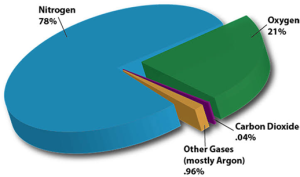
dynamics—provide a more consistent explanation for observed trends.”
Carbon dioxide (CO2) is said to be the primary greenhouse gas (GHG) emitted through human activities. Pursuant to this, it is important to note that CO2 makes up only 0.04% of the atmosphere (see figure below), while human CO2 emissions make up only 3% of this 0.04%.
Furthermore, Africa only contributes 2 to 3% of the 3% of the 0.04% above, or about 0.000036% of the atmosphere that is supposedly causing the “climate crisis”. Thus, the claim that CO2 is a dangerous greenhouse gas is the Achilles heel of the “climate crisis” narrative. Meanwhile, according to Oxfam, the richest 1 percent of the world’s population produced more carbon emissions in 2019 than the five billion people who made up the poorest two-thirds of humanity.
Top Facts on Climate Controversy, Fully Explained:
Climate the Movie: